
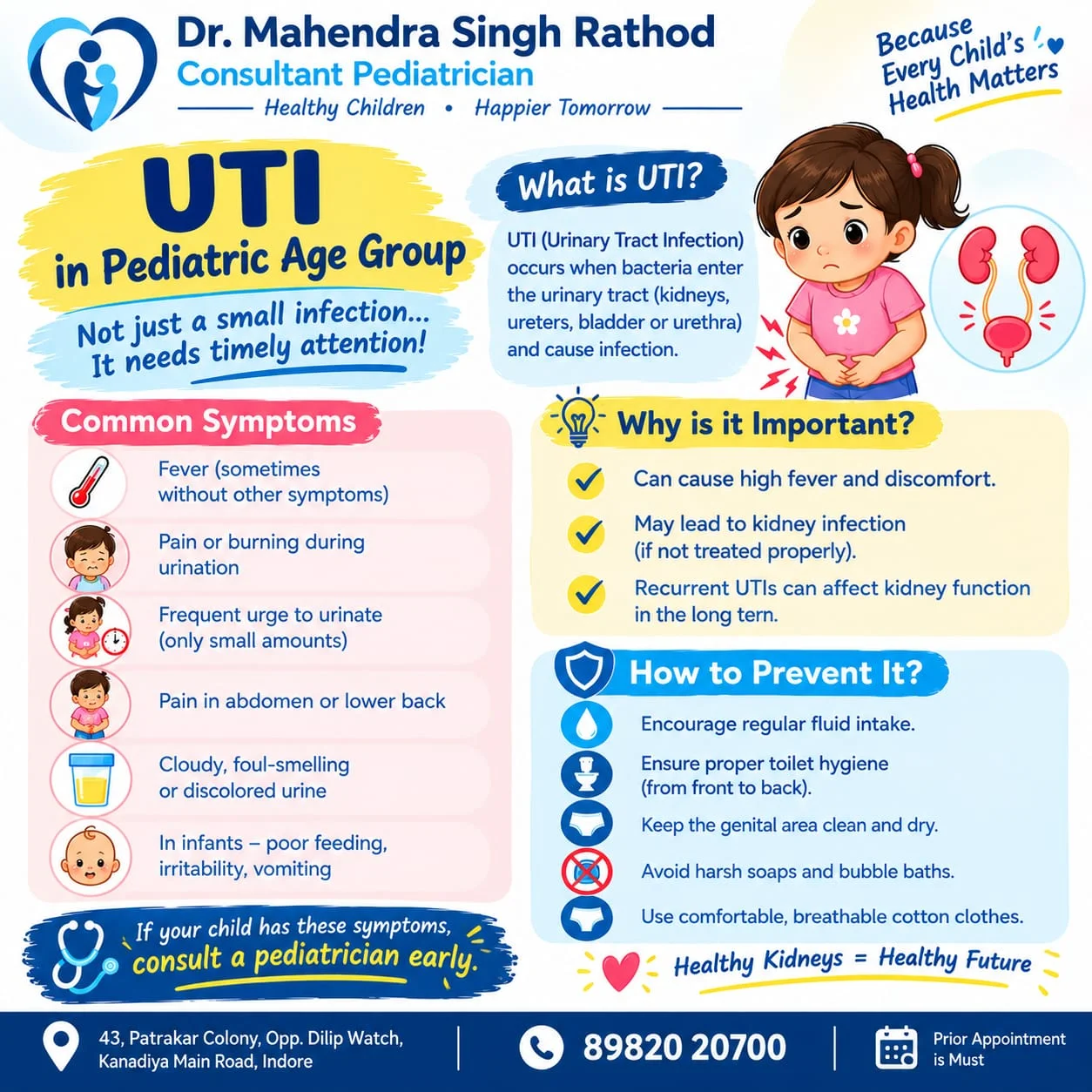
When a child starts avoiding the toilet, complains while passing urine or develops an unexplained fever, parents need clear guidance on what to do next. For families seeking UTI treatment for children in Indore, Dr. Mahendra Singh Rathod offers pediatric consultation near Kanadia Road, Indore.
A urinary infection can look different in a baby and a school-going child. Understanding those differences helps you describe the problem, arrange appropriate assessment and follow the treatment plan confidently.
A urinary tract infection in children usually develops when bacteria enter the urinary tract and multiply. An infection in the bladder is called cystitis; the kidneys can also become infected.
UTIs can affect children from infancy through the teenage years. When identified early and treated appropriately, most bladder infections do not cause complications. An untreated infection can spread to the kidneys, which is why timely assessment matters.
UTI symptoms in babies in Indore may be difficult to recognise because infants cannot explain burning or discomfort. Possible signs include fever, unusual fussiness, poor feeding and vomiting.
A young child may simply seem unwell. Contact a healthcare professional if your child has these symptoms or a fever without an obvious explanation. Urine testing helps determine whether an infection is present.
Children who can describe their symptoms may report:
These changes deserve assessment. Ask your child to explain what feels different, using familiar words and without making them feel embarrassed.
A baby younger than three months with a suspected UTI needs urgent pediatric assessment. A temperature of 38°C or higher in this age group also requires urgent medical advice.
Seek immediate emergency care if a child is difficult to wake, has trouble breathing or is responding abnormally. Signs of dehydration, such as noticeably fewer wet nappies, need prompt medical advice.
Fever with vomiting or pain in the back or side can occur with a kidney infection and should be assessed promptly. Urgent symptoms warrant prompt hospital assessment.
A pediatrician considers the child’s symptoms, medical history and examination findings alongside urine testing.
Two commonly used tests are:
Culture results usually take a few days. Ask how the result will be communicated and whether it could change the initial treatment plan.
The collection method depends on your child’s age and the reason for testing. Older children may provide a midstream sample in a suitable container. Younger children may need a clean-catch sample or collection by a trained healthcare professional.
Follow the clinic’s instructions carefully. Avoid touching the container’s inside, and ask how soon the sample should reach the laboratory. Urine squeezed from a nappy is unsuitable for confirming a UTI because contamination can affect the result.
A sample should generally be collected before antibiotics are started. However, treatment for a seriously ill child must not be delayed if a sample cannot be obtained promptly.
Bacterial bladder infections are treated with antibiotics prescribed for the individual child. The choice depends on factors including age, the bacteria involved and known antibiotic allergies.
Some children can take medicine by mouth; very unwell children may require hospital treatment. The duration of treatment also varies according to the infection and the child’s circumstances.
Before leaving the consultation, clarify the dose, timing, storage instructions and what to do if your child has difficulty taking the medicine.
Give the prescribed medicine exactly as directed and complete the course unless the treating doctor changes the instructions. Contact the healthcare team about side effects or difficulty giving the medicine.
Offer fluids suitable for your child’s age and health; ask the pediatrician how much is appropriate. Continue breastfeeding as usual if your baby is breastfed.
Keep track of fever, feeding and toilet symptoms. Seek reassessment if your child becomes worse or is not improving within 48 hours of treatment.
UTI prevention in children includes practical habits that families can build gradually:
Constipation and difficulties with bladder emptying can increase the likelihood of infections. Ask for guidance when these problems occur repeatedly.
Avoid blaming a child for wetting accidents or illness. A calm conversation makes it easier for them to report discomfort and ask for a toilet break.
Regular, age-appropriate fluid intake helps maintain hydration. High-fibre foods may help prevent constipation, which can contribute to urinary problems.
A special food or drink should not be relied on to treat an established infection. Discuss dietary supplements with the child’s healthcare professional before using them.
Recurrent infections may require further investigation. Imaging choices depend on age, the pattern of infection and response to treatment. Ask what each recommended test is intended to show.
Keep previous culture reports, prescriptions and imaging results together. Knowing which episodes were confirmed infections helps the clinician understand the history more accurately.
Write down when symptoms began, any measured temperatures and changes in feeding, urination or bowel habits. Include medicines already given and known allergies.
An older child can describe the discomfort in their own words. Reassure them that discussing toilet symptoms is a normal part of looking after their health.
Parents can ask:
Leave with a clear contact plan for questions that arise during treatment.
Families can arrange consultation in Patrakar Colony, opposite Dilip Watch on Kanadia Main Road, Indore. Confirm the exact address and appointment availability when calling.
Prior appointments are required for routine visits. Mention your child’s age and main symptoms when booking so the clinic understands the reason for the consultation.
Yes. Babies and younger children may have fever, poor feeding or vomiting without recognisable urinary discomfort. Their symptoms and urine test results need professional assessment.
No single symptom confirms a urinary infection. Smell should be considered with other symptoms and the child’s overall condition when deciding whether testing is needed.
No. Imaging decisions depend on age, the type of infection, recurrence and response to treatment. Ask why a scan is recommended for your child.
Cranberry products do not treat an existing bladder infection and should not replace medical care. A child with suspected UTI needs appropriate assessment and treatment.
Understanding the symptoms and getting the right urine tests can help families move from uncertainty to a clear care plan. Contact Dr. Mahendra Singh Rathod to enquire about UTI treatment for children in Indore and arrange a pediatric consultation.
Contact Us Today to Book Your Child’s Consultation!
| Tags: | #UTI Treatment for Children in Indore |


